
Basketball Handicap Odds: NBA Point Spread Betting
 Available in US

Point spread betting stands as the great equalizer in NBA wagering. Unlike moneyline bets where you simply pick a winner, spread betting adds a layer of complexity that keeps both recreational bettors and sharp professionals coming back for more. The concept sounds simple enough: oddsmakers assign a margin of victory, and you decide whether the favorite will win by more than that margin or the underdog will keep it closer than expected.
What makes spread betting particularly appealing in basketball is the sport’s scoring nature. With teams routinely putting up over 100 points per game and leads fluctuating throughout, the final margin becomes as important as the outcome itself. A dominant team like the Celtics might win 75% of their games, but covering spreads of -8 or -10 consistently proves far more challenging. This dynamic creates opportunities for bettors willing to dig deeper than surface-level analysis.
The NBA’s 82-game regular season provides an enormous sample size for spread betting. Unlike the NFL’s 17 games where variance plays a larger role, basketball’s extended schedule allows patterns to emerge and sharp bettors to identify profitable angles. Teams develop tendencies against the spread that persist over weeks or even months. Understanding these patterns, combined with knowledge of how spreads are constructed and why they move, separates successful bettors from those who simply pick favorites and hope for the best.
If you want to diversify your wagers beyond traditional spreads, exploring NBA player props can offer significant value based on individual matchups.
Beating the Book: Basketball Handicap Lines and Point Spreads
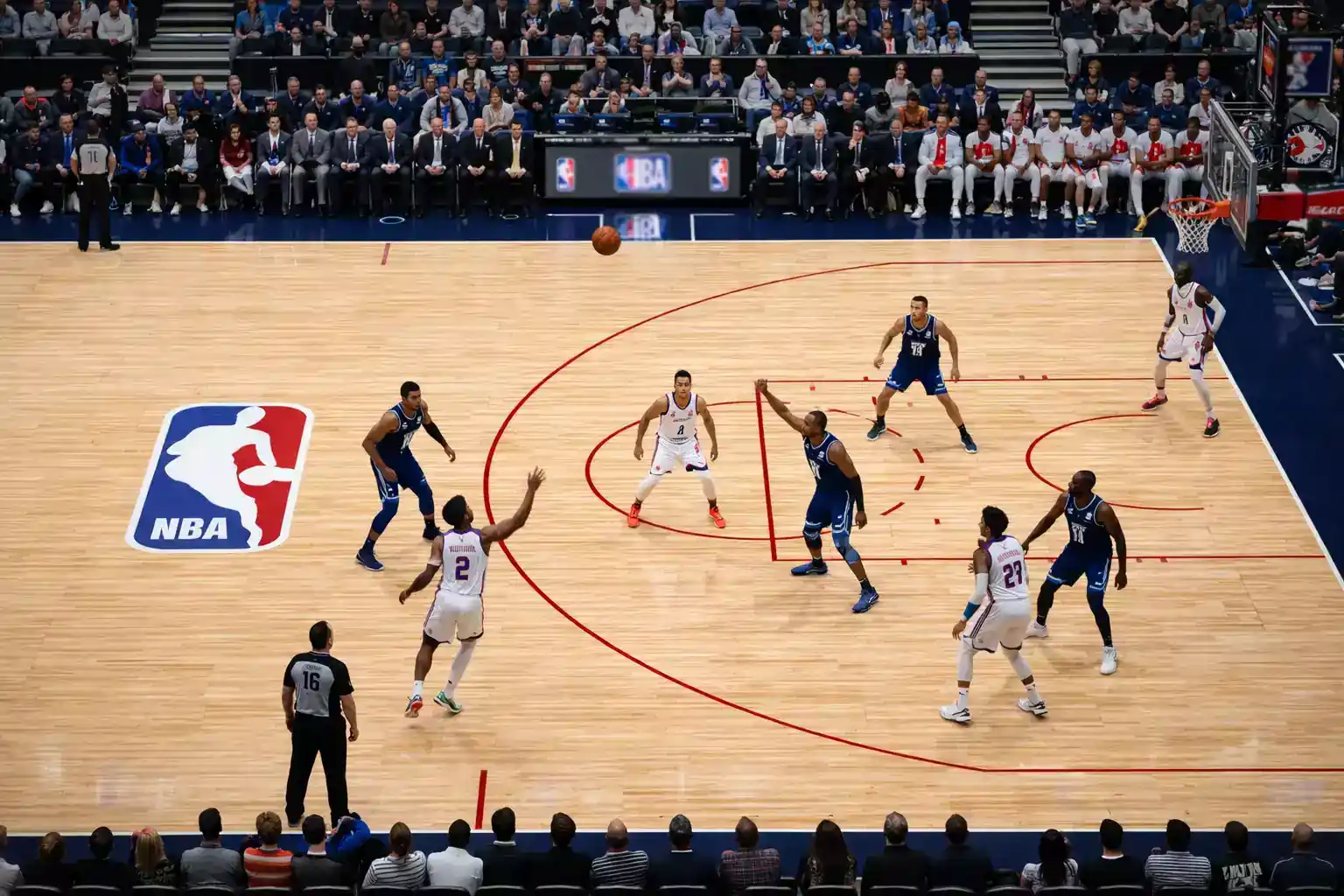
At its core, a point spread represents the oddsmaker’s prediction of the margin between two teams. When you see the Lakers listed at -6.5 against the Jazz, the book expects Los Angeles to win by approximately seven points. Betting the Lakers means they must win by seven or more for your wager to cash. Taking the Jazz at +6.5 requires only that they lose by six or fewer points, or win outright.
The half-point attached to most spreads serves a specific purpose: eliminating ties. A spread of -6.5 produces a definitive result. Either the favorite covers or doesn’t. When books do post whole numbers like -7, a push becomes possible if the favorite wins by exactly that margin. In push scenarios, bets are refunded rather than graded as wins or losses. Some bettors specifically seek out whole-number spreads hoping for the safety net of a potential push, while others prefer the slightly better odds that often accompany half-point lines.
Reading spread notation requires understanding the relationship between the number and the juice (vigorish). A typical spread might appear as Lakers -6.5 (-110) vs Jazz +6.5 (-110). The -110 indicates you must risk $110 to win $100 on either side. This built-in commission represents the sportsbook’s profit margin. Occasionally you’ll find lines with different juice on each side, perhaps Lakers -6.5 (-115) and Jazz +6.5 (-105), reflecting the book’s attempt to balance action without moving the spread itself.
The distinction between favorites and underdogs extends beyond simple notation. Favorites carry the burden of not just winning, but winning convincingly. A team favored by double digits must dominate from start to finish, maintaining focus even when the game’s outcome seems determined. Underdogs, meanwhile, merely need to compete. They can lose by nine points when getting ten and still cover. This asymmetry creates psychological dynamics that affect how teams perform against the number.
Half-point spreads warrant special attention because they eliminate push possibilities while often determining outcomes. The difference between -6 and -6.5 might seem trivial until your team wins by exactly six. Sharp bettors track which numbers produce the most pushes historically and factor this into their line shopping strategy. In the NBA, certain margins like 5, 7, and 10 points occur frequently enough to make half-points around these numbers particularly valuable.
Push scenarios, while less common with half-point spreads prevalent, still occur regularly on key numbers. When pushes happen, your stake returns and the bet essentially never happened. Some bettors view pushes as disappointing non-results; others appreciate the protection whole numbers provide. Your perspective likely depends on whether you had the better of the number when the push occurred.
How Oddsmakers Set NBA Spreads

Opening lines emerge from sophisticated models that account for dozens of variables. Major sportsbooks employ teams of analysts who build power ratings for each team, updating these ratings after every game. These power ratings represent each team’s estimated strength on a neutral court. When two teams meet, the difference in their ratings forms the foundation of the spread, adjusted for home court advantage and other factors.
The typical home court advantage in the NBA ranges between 2 and 3 points, though this varies by team and venue. Some arenas, particularly those at higher altitudes like Denver’s Ball Arena, provide larger edges. The Nuggets playing at home might see their spread adjust by 4 points rather than the standard 3. Oddsmakers incorporate these specific venue effects into their calculations, creating more accurate opening numbers.
Public perception influences spreads more than purists might like to admit. Books know that casual bettors gravitate toward popular teams and stars. When the Warriors host a middle-tier opponent, the public money disproportionately backs Golden State. Oddsmakers shade lines accordingly, making favorites slightly more expensive than pure mathematical models would suggest. This creates theoretical value on unpopular underdogs, though extracting that value requires fighting against your own instincts.
Recent form weighs heavily in spread construction. A team that won their last five games by comfortable margins might see their spread increase even if their overall season numbers don’t justify it. Conversely, teams on losing streaks often find spreads compressed, the market reacting to what just happened rather than what should happen statistically. These reactions create opportunities for bettors who recognize when market movements overreact to small sample sizes.
Head-to-head history between teams factors into spreads, though perhaps less than casual bettors assume. If the Clippers covered easily in their last three meetings with the Kings, oddsmakers note this pattern without necessarily adjusting spreads dramatically. Historical matchup data provides context but rarely overrides fundamental power rating calculations. Still, persistent patterns between specific teams occasionally indicate real tactical advantages worth monitoring.
The 2-3 point home court adjustment mentioned earlier deserves elaboration because it significantly impacts your betting decisions. A neutral-site spread of 5 points becomes -8 for the home favorite or +2 when that team plays away. Understanding this adjustment helps you evaluate whether a spread fairly reflects the matchup or whether the location adjustment created value on either side.
Make sure to check the best UK basketball betting site for the latest odds and expert predictions.
Factors That Move NBA Spreads
Injury news stands as the single most powerful mover of NBA spreads. When a star player’s status changes from probable to out, spreads react within minutes. A team losing their primary scorer might see their spread shift by 3-5 points, sometimes more for transcendent talents. The key for bettors lies in timing: getting down before injury news breaks means capturing value, while betting after adjustments means accepting a less favorable number.
Sharp money moves lines quickly and decisively. When professional bettors identify a mispriced spread, they place substantial wagers that sportsbooks notice immediately. A book seeing coordinated action from known sharp accounts will adjust their line, often before significant public money arrives. These steam moves happen fast, particularly at books known for taking large bets. Tracking line movement across multiple sportsbooks helps identify when sharp action has occurred.
The concept of opening versus closing lines matters enormously for evaluating your betting accuracy. Markets become more efficient as game time approaches because more information gets incorporated into the price. Opening lines reflect predictions made days or hours in advance, while closing lines represent the market’s final verdict with all available information included. Studies consistently show that closing lines predict outcomes better than opening lines, making early bets potentially more valuable if you identify mispricings before the market corrects.
Public betting pressure influences spreads throughout the betting period. When 80% of bets come in on one side, books face imbalanced liability. They can either accept this risk (if they believe the public is wrong) or move the line to encourage action on the other side. Understanding which books move on public action versus those who stand firm helps you interpret line movements correctly. Some movements indicate sharp opinions; others merely reflect recreational betting patterns.
Line movement interpretation requires context. A spread moving from -7 to -7.5 tells a different story than one moving from -7 to -6. The first suggests money or sharp action on the favorite. The second indicates either public money on the underdog or sharp money backing them, depending on the betting percentages. Monitoring both line movement and betting percentages (available at various tracking sites) provides a fuller picture than either metric alone.
Timing your bets represents a strategic decision with no universal right answer. Betting early captures value when you identify mispricings before the market corrects. Betting late ensures you have maximum information about injuries, rotations, and lineup decisions. Some bettors split the difference, placing partial bets early and completing their position closer to game time. Your approach should match your edge: if you excel at identifying opening line value, bet early; if your edge comes from injury analysis and lineup news, wait.
NBA Spread Betting Strategies
Against the spread records reveal patterns invisible in straight win-loss columns. A team might have a winning record but struggle covering larger spreads consistently. Conversely, bad teams occasionally provide ATS value despite losing most games. The Pistons might win only 30 games but cover more than half their spreads because oddsmakers set lines too wide against them. Tracking ATS performance by spread size helps identify where teams over- or under-perform market expectations.
Back-to-back games create measurable disadvantages that sophisticated bettors exploit. Teams playing their second game in consecutive nights show statistically worse performance, particularly on the road. The fatigue factor compounds when the back-to-back involves significant travel. A team flying from Miami to Minneapolis for the second leg of a back-to-back faces accumulated exhaustion that affects late-game execution. Spreads typically account for back-to-backs, but the adjustment doesn’t always match the actual performance decline.
Travel distance impacts team performance beyond simple rest calculations. The NBA’s geographic spread means some teams regularly cross multiple time zones. West coast teams traveling east for afternoon games face body clock challenges their opponents don’t. Accumulated travel over several games creates fatigue that shows up in fourth-quarter performance and defensive intensity. The analytics community continues refining models that quantify these travel effects with increasing precision.
Rest advantage, meaning one team has more days off than their opponent, correlates with spread coverage. A team coming off three days rest facing one on zero days rest holds a measurable edge. This advantage appears in the box score through better shooting percentages and fewer turnovers late in games. Oddsmakers price rest differentials into their lines, but the market occasionally underestimates the effect when other factors dominate the narrative.
Contrarian betting means wagering against public consensus. When 75% of bets land on the Lakers, contrarian bettors take the opponent. The logic: public money often reflects bias toward popular teams and overreaction to recent results rather than careful analysis. Additionally, sportsbooks shade lines toward popular sides, creating mathematical value on unpopular picks. Contrarian betting works best with large spreads where public perception diverges most from accurate probability.
Fading the public extends the contrarian approach by specifically targeting heavily bet favorites. When the public piles onto a popular team laying large points, you bet the underdog. This strategy has shown modest long-term profitability in studies, particularly for road underdogs receiving less than 30% of spread bets. The approach requires discipline to bet against teams you might personally favor and patience to accept that individual results vary wildly.
Identifying situational spots combines multiple factors into higher-confidence plays. A team on the second night of a back-to-back, coming off a big home win, traveling across the country to face a rested underdog represents a prime fade situation. Individual factors might produce small edges; combining several in a single game compounds those edges. The most profitable spread bettors develop systematic approaches to identifying and exploiting these multi-factor situations.
Common NBA Spread Betting Mistakes

Overvaluing big-name teams costs casual bettors significant money over a season. The Lakers, Warriors, Celtics, and other marquee franchises attract disproportionate public attention regardless of their actual spread-covering ability. Sportsbooks know this and shade lines accordingly, building extra points into spreads against popular teams. When you bet the Celtics at -9 because they’re a great team, you’re likely paying a popularity tax that makes the bet mathematically unfavorable.
Ignoring schedule context leads to uninformed bets. A matchup between two playoff teams might seem straightforward, but context changes everything. Is one team on their fourth road game in six nights? Did they just clinch a playoff spot and might rest starters? Are they looking ahead to a marquee matchup two days away? These situational factors influence effort levels and rotations in ways that directly impact spread coverage but don’t appear in simple power ratings.
Chasing losses by betting larger spreads represents one of the most destructive habits in sports betting. After a bad day, the impulse to make it back quickly leads bettors toward underdogs getting double-digit points because the potential return feels substantial. These large spreads exist precisely because covering them is difficult. Betting bigger numbers to chase losses compounds a bad situation with poor decision-making, accelerating bankroll destruction rather than reversing it.
Not shopping for the best numbers seems like minor negligence but matters enormously over time. The difference between getting +7.5 versus +7 on an underdog seems trivial until you lose by exactly seven. Having accounts at multiple sportsbooks allows you to compare lines and consistently take the best available number. Even a half-point improvement on 20% of your bets produces meaningful profit gains over hundreds of wagers.
Emotional betting after watching a game distorts your judgment. You saw the Knicks dominate for three quarters before the starters sat, and now they’re only 4-point favorites tomorrow. The temptation to bet them heavily feels logical based on what you witnessed. But recency bias and small sample size thinking lead to overconfidence. What you watched was one game; the spread reflects aggregated information from thousands of games and professional analysts. Your emotional conviction rarely beats their systematic approach.
Advanced Spread Betting Tips

Key numbers in NBA betting differ from football, where 3 and 7 dominate. Basketball sees more variation in final margins, but certain numbers still appear more frequently than others. Margins of 5, 7, and 10 points occur often enough that half-points around these numbers carry extra value. Getting +7.5 instead of +7 or -9.5 instead of -10 doesn’t always change the outcome, but when games land on these key numbers, having the right side of the half-point determines whether you win or lose.
Buying points lets you move spreads in your favor for additional juice. Moving a spread from -7.5 to -7 might cost an extra 10 cents of juice, changing your bet from -110 to -120. Whether this makes mathematical sense depends on how frequently games land on the number you’re crossing. Buying through key numbers like 7 can be valuable; buying through less significant numbers rarely justifies the extra cost. Understanding when to buy requires knowing the historical distribution of final margins.
Teaser betting combines multiple spread bets while adjusting each spread by a fixed amount in your favor. A 6-point teaser might move your Lakers bet from -8 to -2 and your Celtics bet from -10 to -4. Both must cover their adjusted spreads for the teaser to win. Teasers in basketball don’t cross key numbers as valuably as football teasers cross 3 and 7, making them generally less profitable. Still, specific teaser strategies focusing on particular number ranges can provide positive expectation.
Alternate spreads offer different point totals at adjusted odds. Instead of the standard -6.5 (-110), you might take -3.5 (-180) or -9.5 (+140). These alternate lines let you express varying degrees of confidence. If you believe the favorite will win but are uncertain about covering a large spread, a smaller alternate spread at worse odds reduces variance. Alternatively, if you’re highly confident in a blowout, larger alternate spreads at plus-money provide amplified returns.
Live spread betting opens opportunities unavailable before tipoff. Spreads adjust continuously during games based on score, time remaining, and game flow. A team down 15 points at halftime might be available at +8 for the second half or +3.5 for the game. If you believe they’ll mount a comeback, live betting lets you capture value the pregame market couldn’t offer. The challenge lies in processing information quickly and maintaining discipline when games move faster than your analysis.
The integration of player-tracking data has created edges for bettors willing to dig deeper than traditional statistics. Metrics like defensive rating against specific play types, player speed and acceleration, and distance traveled per game provide insights invisible in box scores. Teams consistently defending the three-point line poorly, for instance, might struggle covering spreads against high-volume shooting opponents. Incorporating these advanced metrics into your spread analysis separates your approach from the recreational majority.
Final Thoughts
Spread betting rewards those who combine statistical rigor with situational awareness. The fundamentals remain constant: understand how spreads work, track why they move, and identify spots where the market misprices teams. But execution requires discipline that many bettors lack. Shopping for the best number, managing bankroll conservatively, and avoiding emotional decisions after wins or losses matters as much as picking the right side.
The NBA’s long season provides ample opportunity to refine your approach. Early mistakes become learning experiences rather than season-defining disasters. Track your bets meticulously, noting not just outcomes but the reasoning behind each wager. Patterns in your success and failure reveal where your analysis excels and where it needs work. The bettors who profit consistently treat spread betting as a skill to develop rather than a game to play.
Every spread represents someone’s opinion about how a game will unfold. Sometimes that opinion is wrong. Your job is finding those mistakes before the market corrects them, betting with conviction when you identify value, and accepting that even good bets lose regularly. Profitability comes from making better decisions than the market average over hundreds of wagers, not from picking winners on any single night.
Published by the nba Betting team.