
Profitable Basketball Systems and NBA Betting Strategies
 Available in US

The difference between recreational bettors and those who profit consistently comes down to approach. Recreational bettors pick teams they like, follow hunches, and chase excitement. Profitable bettors treat NBA betting as an analytical exercise where edge accumulates through thousands of decisions made slightly better than the market expects. Neither approach is wrong as entertainment, but only one produces long-term returns.
Strategy matters because sportsbooks employ sophisticated models and adjust lines based on sharp action. Beating this market requires more than basketball knowledge; it demands understanding how betting markets function, where inefficiencies emerge, and how to exploit them systematically. The casual fan who watches every game might still lose money to someone who never watches but understands line movement, situational factors, and bankroll mathematics. Knowledge of basketball is necessary but insufficient; knowledge of betting completes the picture.
This guide breaks down the strategic elements that separate profitable NBA bettors from the recreational majority. From foundational concepts like value betting and expected value through practical applications like situational analysis and line shopping, each section builds toward a complete framework for approaching NBA betting analytically. Implementing even a few of these principles improves results; implementing all of them transforms betting from gambling into something closer to investing.
One of the most effective ways to apply these analytical methods is through NBA live betting, where you can capitalize on real-time momentum shifts.
Bankroll Management and Value Betting for Basketball
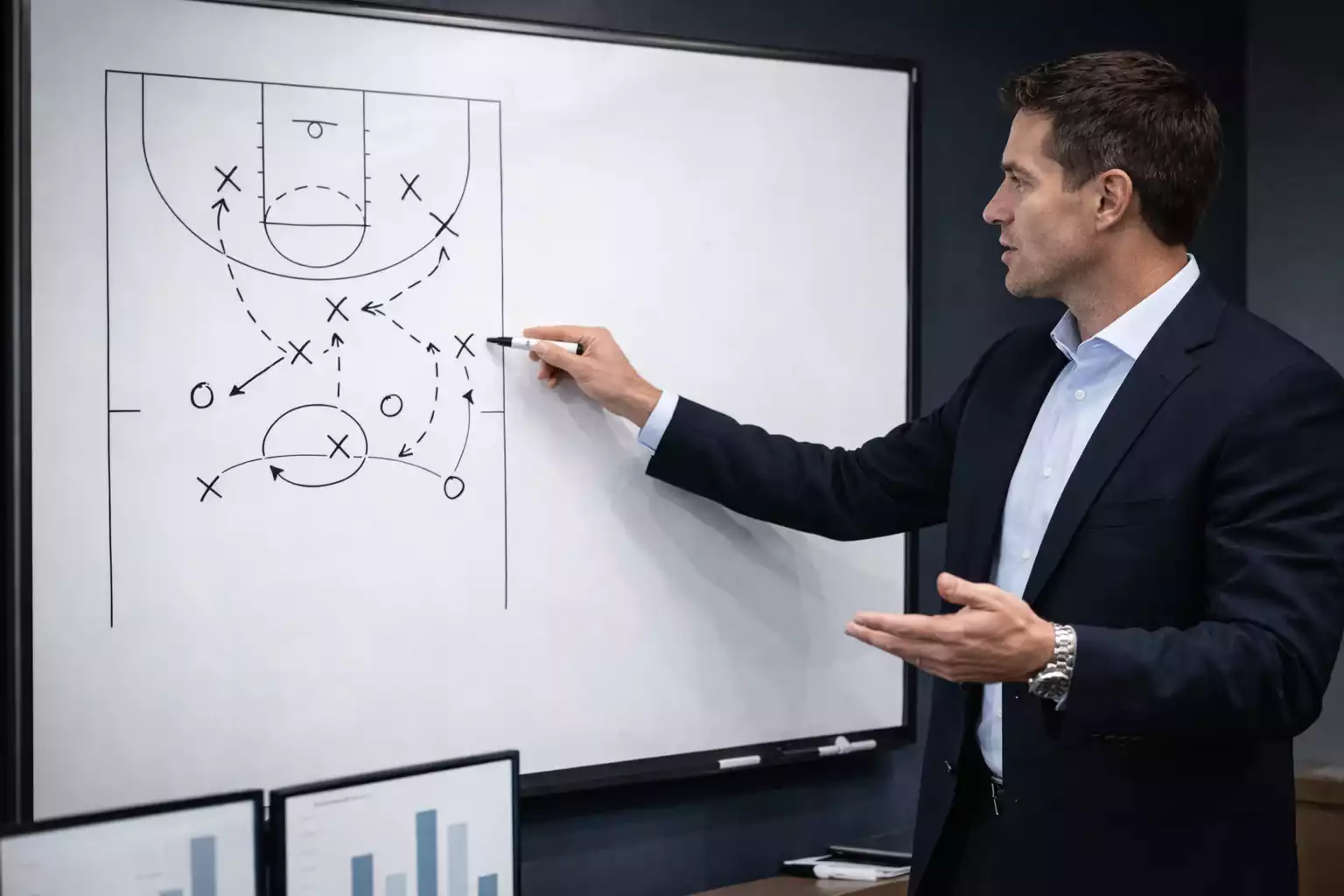
Value betting represents the core concept underlying all profitable sports wagering. A bet has value when the true probability of winning exceeds what the odds imply. If you believe the Nuggets have a 55% chance to cover their spread but the odds imply only 52.4% probability (standard -110 juice), that bet offers value. Finding and consistently betting these positive expected value situations produces profit over time, regardless of whether individual bets win or lose.
Understanding implied probability converts confusing odds formats into percentages you can evaluate. American odds of -150 imply 60% probability; +200 implies 33.3%. When you see Lakers -150 against the Pelicans, the market believes Los Angeles has roughly a 60% chance to win. Your job is determining whether you agree with that assessment. If you think the Lakers win 70% of the time, bet them. If you think they win only 55%, the Pelicans offer value at their implied 40% despite being underdogs.
Expected value quantifies how much a bet is worth over the long run. A $100 bet at +100 (implied 50%) on an outcome you believe occurs 55% of the time has positive expected value: you expect to win $55 and lose $45 per attempt on average, netting $10. This math works regardless of the single-bet outcome. Expected value thinking prevents the common mistake of evaluating bets by whether they won rather than whether they were correct decisions given available information.
Long-term thinking distinguishes strategic bettors from those chasing immediate results. Any single bet might win or lose regardless of its quality. A terrible bet at -400 on a heavy favorite still wins most of the time. A brilliant bet at +300 on an underpriced underdog still loses more often than it wins. Evaluating your betting requires sample sizes large enough for edge to manifest through variance. This means tracking hundreds of bets before drawing conclusions about your approach’s effectiveness.
Discipline and patience test bettors more than analytical skill. You might identify genuine edge but lack the emotional control to bet consistently without overreacting to short-term results. A losing week tempts increased bet sizing to recover losses. A winning week breeds overconfidence and sloppy analysis. Maintaining consistent processes regardless of recent outcomes requires psychological fortitude that many bettors underestimate until variance humbles them.
Statistical Analysis for NBA Bettors
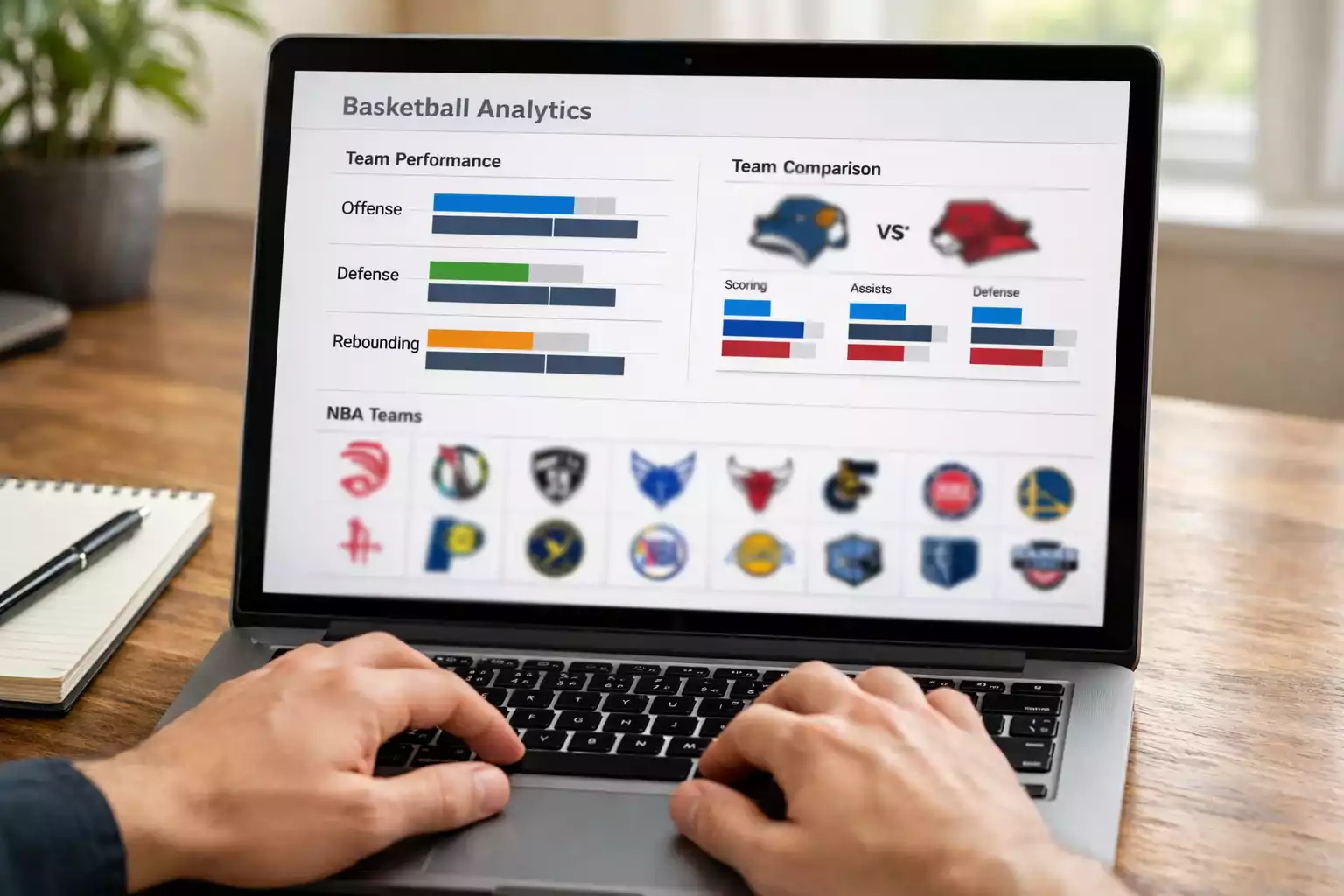
Key statistics for NBA betting extend beyond points per game and win-loss records. Effective pace measures possessions per 48 minutes, indicating how fast teams play and how many scoring opportunities each game provides. Net rating, the difference between offensive and defensive rating per 100 possessions, captures overall team quality better than raw point differential. Understanding which statistics predict future performance versus which merely describe past results focuses your analysis on actionable information.
Offensive and defensive ratings measure efficiency per 100 possessions, removing pace effects that distort raw scoring numbers. A team scoring 115 points while allowing 110 looks identical in score margin to one scoring 100 while allowing 95, but the first team plays much faster. Efficiency ratings reveal that both teams have +5 net ratings despite vastly different scoring outputs. Comparing teams on efficiency rather than raw numbers provides more accurate assessments of relative strength.
Pace analysis matters for totals betting and prop projections. When two fast-paced teams meet, expected possessions increase, inflating point totals and individual statistics. Slow-paced matchups compress these numbers. Vegas totals incorporate pace projections, but understanding the underlying math helps identify when lines might over- or under-react to pace differentials. Two teams averaging 105 possessions each don’t combine for 210 possessions; the game pace settles somewhere between their individual tendencies.
The four factors framework, developed by Dean Oliver, identifies the statistical categories that most strongly predict team success: effective field goal percentage, turnover rate, offensive rebounding rate, and free throw rate. Teams excelling in these areas tend to win games; teams failing in them tend to lose. Analyzing matchups through this lens highlights where advantages and disadvantages cluster, providing structure for evaluating game outcomes beyond gut feeling.
Finding reliable statistics requires knowing which sources to trust. NBA.com provides official statistics with play-by-play detail. Basketball-Reference offers comprehensive historical data and advanced metrics. Cleaning the Glass filters out garbage time, providing statistics that better reflect meaningful game action. Building familiarity with these resources and understanding their methodological differences improves the quality of your analytical inputs.
Building your own models moves beyond consuming others’ analysis to generating your own projections. Even simple models that combine a few key variables often outperform intuition alone. You might build a spreadsheet that weights net rating, recent form, rest days, and home court advantage to generate spread projections. Comparing your projections to market lines identifies potential betting opportunities. Model building forces explicit thinking about which factors matter and how much, improving analytical rigor even when models prove imperfect.
Regression analysis and similar statistical techniques help identify which factors actually predict outcomes versus which merely correlate with them. A team’s record in close games might seem predictive but often reflects variance rather than skill. Three-point shooting percentage fluctuates more than shooting ability, meaning hot-shooting teams often regress. Understanding these statistical principles prevents overreacting to recent results that don’t indicate future performance.
Situational Betting Strategies

Back-to-back game analysis reveals one of the NBA’s most reliable situational edges. Teams playing their second game in consecutive nights perform measurably worse, particularly on defense and in fourth quarters. The effect compounds with travel; a team playing in Boston on Monday and Miami on Tuesday faces accumulated fatigue that shows in the box score. Sportsbooks price back-to-backs into their lines, but the adjustment doesn’t always match the actual performance decline, creating opportunities for bettors who track these situations systematically.
Rest advantage goes beyond back-to-backs to encompass any differential in days off between opponents. A team with three days rest facing one with zero days rest holds a quantifiable edge that appears in shooting percentages, turnover rates, and late-game execution. The advantage increases with greater rest differential. Tracking rest days for every team and comparing them to spread adjustments reveals when markets undervalue or overvalue these effects.
Travel and time zone considerations affect West Coast teams traveling east more than the reverse. Playing afternoon games after crossing three time zones disrupts circadian rhythms, reducing reaction time and decision-making quality. Accumulated travel over several road games creates fatigue that doesn’t show in simple rest-day calculations. Teams on their fourth straight road game, even with rest days between, often underperform their season averages.
Schedule spot identification combines multiple situational factors to find high-value betting opportunities. A team might face a classic letdown spot: coming off an emotional home win against a rival, traveling across the country, facing a lesser opponent before a marquee matchup later in the week. Each individual factor provides a small edge; combining them creates situations where market prices frequently miss the mark.
Motivational factors resist quantification but influence outcomes in ways analytical models miss. Teams fighting for playoff positioning in April play differently than those locked into seeding. Eliminated teams sometimes tank for lottery positioning, resting veterans and giving developmental players extended minutes. Recognizing these motivational dynamics helps contextualize statistical projections with real-world considerations that pure numbers overlook.
Revenge game narratives suggest teams play harder against opponents who beat them recently, particularly in embarrassing fashion. The evidence for revenge game effects is mixed; some studies find small edges while others find none. Treating revenge as a minor factor rather than a primary betting thesis maintains appropriate skepticism while acknowledging that motivation can influence effort and intensity.
Playoff positioning implications create varying incentives throughout the season. In March and April, teams near playoff cutlines or seeding thresholds play with urgency that early-season games lack. Meanwhile, teams that clinched positions might rest players or experiment with lineups. Understanding where each team sits relative to meaningful thresholds helps predict effort levels that affect spread coverage.
Stay disciplined and always consult our expert NBA betting hub before placing your wagers.
Reading and Exploiting Line Movement
Understanding why lines move separates sophisticated bettors from casual ones. Lines move for two primary reasons: new information enters the market, or betting action unbalances the book’s exposure. Injury news represents the most common informational cause; when a star is ruled out, spreads adjust immediately. Betting action moves lines when disproportionate money lands on one side, forcing the book to adjust to manage risk.
Sharp money indicators help identify when professional bettors have acted on a line. Sharps typically bet early, seeking to capture value before the market corrects. When a line moves opposite to betting percentages—if 70% of bets are on Team A but the line moves toward Team B—sharp money likely caused the movement. This reverse line movement signals that the smaller dollar amount from sharps outweighed the larger number of recreational bets.
Steam moves describe rapid line movements across multiple sportsbooks in response to sharp action. When a respected bettor or syndicate places a large wager, books adjust their lines, and other books follow within minutes. Tracking steam moves reveals where sharp money is flowing, providing information about which side professionals favor. Some bettors follow steam moves as a strategy, though this approach works best when executed quickly before lines settle.
Reverse line movement occurs when the line moves against the side receiving the majority of bets. This counterintuitive movement suggests that the smaller number of bets on the other side carries more weight—typically because those bets are larger or come from respected accounts. Identifying reverse line movement helps bettors align with sharp money rather than following public sentiment.
Optimal timing for bets depends on your edge and information access. Bettors with strong pre-game models often bet early to capture value before the market incorporates information their models already reflect. Bettors who rely on injury news or lineup information might wait until closer to game time when this information becomes available. There’s no universally correct answer; the right timing matches your analytical approach.
Opening versus closing line value helps evaluate your betting accuracy. If you consistently bet sides that move in your direction—you take a team at -3 and it closes at -5—you’re identifying value before the market. This closing line value metric serves as one of the best long-term indicators of betting skill, better than simple win rate because it accounts for the price you captured relative to the final market consensus.
Line shopping across multiple sportsbooks captures better numbers on every bet. The difference between -6.5 and -7 seems small but matters over hundreds of bets. Maintaining accounts at several legal sportsbooks and comparing lines before betting ensures you always get the best available number. Even half-point improvements add up to significant profit over a season of betting.
Finding the best number sometimes means waiting rather than betting immediately. If your target spread is -4.5 and the line currently sits at -5.5, patience might be rewarded if the line moves down. Of course, it might also move up. Developing intuition about likely line movements helps optimize this timing, though accepting that you’ll sometimes miss the best number comes with the territory.
Bankroll Management Strategies

Unit sizing establishes a consistent betting amount relative to your total bankroll. Most professional bettors risk between 1% and 5% of their bankroll per bet, with 1-2% being standard for those prioritizing longevity over growth. If your bankroll is $5,000, a 2% unit means $100 bets. This approach ensures that losing streaks, which are inevitable even for skilled bettors, don’t devastate your ability to continue betting. Unit sizing provides the mathematical foundation for surviving variance.
Flat betting means wagering the same amount on every bet regardless of confidence level. This approach simplifies record-keeping and prevents the common mistake of oversizing bets you feel strongly about. The discipline of flat betting often outperforms variable staking because bettors tend to overestimate their confidence on individual wagers. What feels like a lock often loses, and those oversized bets damage bankrolls disproportionately.
Variable staking allocates different amounts based on perceived edge. You might bet 2 units on games where your model shows strong value and 1 unit on borderline plays. This approach theoretically optimizes expected value but requires accurate edge estimation—a skill most bettors overestimate. If you can’t reliably calibrate your confidence, flat betting eliminates the damage from miscalibrated sizing.
The Kelly Criterion provides a mathematical formula for optimal bet sizing based on edge and odds. Full Kelly recommends betting a percentage of your bankroll equal to your edge divided by the odds. In practice, most bettors use fractional Kelly (often one-quarter or one-half) because full Kelly produces high variance that many can’t tolerate psychologically. Understanding Kelly helps you appreciate the relationship between edge magnitude and appropriate bet size, even if you don’t apply the formula precisely.
Stop-loss approaches set predetermined limits on daily, weekly, or session losses. When you hit the limit, you stop betting until the next period. This technique prevents catastrophic sessions where chasing losses compounds initial setbacks. Critics argue that if bets have positive expected value, artificial stopping points reduce long-term profit. Proponents counter that psychological factors make stopping valuable even when mathematically suboptimal. Your approach depends on self-awareness about your emotional responses to losing.
Seasonal bankroll planning recognizes that the NBA season is long and variance accumulates over time. Starting the season with enough bankroll to withstand significant drawdowns allows you to remain active through rough stretches. Bettors who run out of capital midseason often did nothing wrong analytically; they simply undersized their bankroll relative to unit size. Planning for the possibility of a 50-100 unit downswing ensures survival through statistical adversity.
Common Betting Mistakes and How to Avoid Them
Chasing losses represents the most destructive pattern in sports betting. After a losing day, the urge to make it back leads to larger bets, lower-quality selections, and emotional decision-making. This spiral accelerates losses rather than reversing them. The antidote is accepting that losing days happen, maintaining consistent unit sizing, and trusting that positive expected value bets will produce profits over larger samples.
Overconfidence bias leads bettors to believe they know more than they do. After a winning week, it’s tempting to credit skill rather than acknowledging the role of variance. This inflated self-assessment leads to larger bets and sloppier analysis. Maintaining humility about the difficulty of beating sports betting markets prevents overconfidence from eroding disciplined processes.
Recency bias overweights recent results when projecting future performance. A team that won three straight games by double digits feels like they’ll dominate again, even if the underlying statistics suggest regression. Similarly, a player who scored 40 points last night seems likely to continue producing, though his season average tells a different story. Consciously weighting longer-term data over recent results counteracts this bias.
Ignoring key information includes skipping injury reports, failing to check lineup confirmations, or missing news that affects game dynamics. The bettor who wagers without knowing that a starting center is questionable has incomplete information that market prices might already reflect. Building a pre-bet checklist that includes injury status, lineup expectations, and recent news prevents the lazy oversights that leak value.
Parlaying too frequently transforms small edges into large disadvantages. Each leg of a parlay multiplies the sportsbook’s margin against you. A three-team parlay at standard -110 odds on each leg loses expected value rapidly. Parlays offer entertainment value and occasional big scores, but building a betting strategy around them surrenders the mathematical edge that makes long-term profit possible.
Not tracking bets prevents learning from your results. Without records of what you bet, at what prices, and with what reasoning, you can’t evaluate which approaches work and which don’t. Detailed tracking reveals patterns: maybe you crush totals but lose on spreads, or win early in the season but fade as the year progresses. This self-knowledge directs improvement efforts where they’ll be most effective.
Betting without a plan means approaching each game reactively rather than systematically. Professional bettors have defined processes they follow for every potential wager. They know which statistics to check, which situational factors to consider, and what threshold of edge justifies a bet. Developing and following your own process eliminates the inconsistency that undermines recreational bettors.
The Strategic Mindset

Profitable NBA betting requires viewing wagering as a skill to develop rather than entertainment to consume. This mindset shift changes how you spend time: instead of just watching games, you study statistics; instead of following hunches, you build models; instead of reacting to results, you evaluate process. The entertainment value remains, but it comes from the intellectual challenge of beating the market rather than the simple thrill of action.
Continuous improvement marks successful bettors. They track results, identify weaknesses, and adjust approaches based on evidence. What worked five years ago might not work today as markets evolve and inefficiencies get priced away. Staying curious about new analytical approaches and honest about your own limitations maintains the edge that consistent effort can provide.
The journey from recreational bettor to profitable one takes longer than most anticipate. Expecting immediate results leads to frustration and abandonment of sound strategies. Patience with the learning process, combined with the discipline to stick with positive expected value approaches through variance, eventually produces the results that strategy promises. The bettors who profit are often those who simply stuck around long enough for their edge to manifest through the noise.
Prepared by the nba Betting editorial staff.